Why Tarp a Leaking Roof
Right Away?
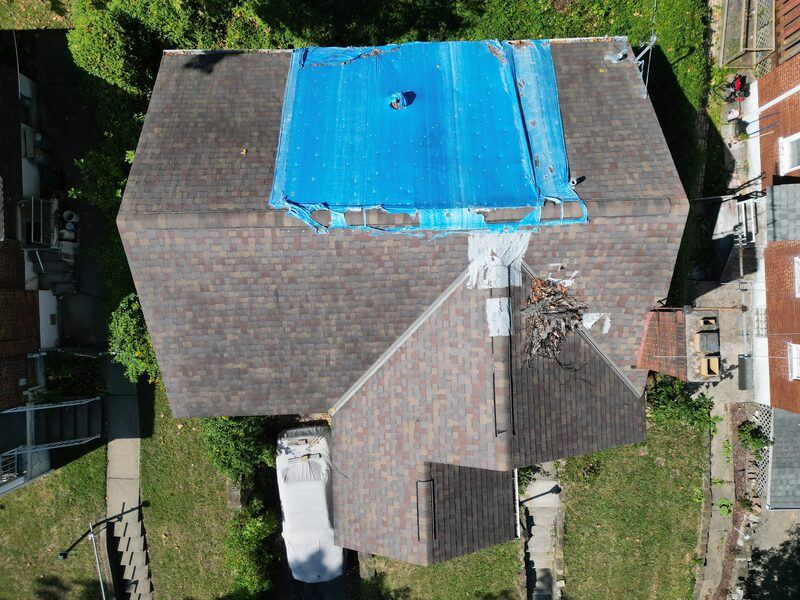
When wind peels shingles back or a limb opens the decking, the water that follows usually does more damage than the storm did. Insulation, drywall, ceilings, floors — that's where the real money bleeds. A properly installed tarp stops the bleeding the day it happens. And if water already got through, my interior crew handles the drywall and ceiling repair once the roof is fixed.
Here's the part most homeowners don't know: nearly every policy carries a duty to mitigate — after a storm, you're expected to take reasonable steps to keep the damage from getting worse. Emergency tarping is exactly that step, and when the damage is part of a covered claim, reasonable mitigation costs are routinely part of the claim. I photograph the damage before the tarp goes down and after it's secured, so your file is built from hour one.
And I'll say the quiet part out loud: a tarp is temporary. It's a bridge to the real repair or replacement — not a substitute for it. I install it like it matters, because it does. Then you get a straight plan for what comes next, and if insurance is in play, I document the damage and meet your adjuster when they come out.
- Same-day / next-morning response for active leaks — 7 days a week
- Heavy-duty tarps, anchored to shed water — not a bedsheet and a prayer
- Photo documentation before and after, formatted for your claim file
- Wind, hail, and fallen-limb damage — roof, ridge, and valley coverage
- Storm claim? I document the damage and meet your adjuster
- Straight answer on what comes next: repair, replacement, or wait